Sage Lang · 27 September 2026
How Content Hierarchy Adjustments Influence Search Engine Crawling Patterns in Enterprise Platforms
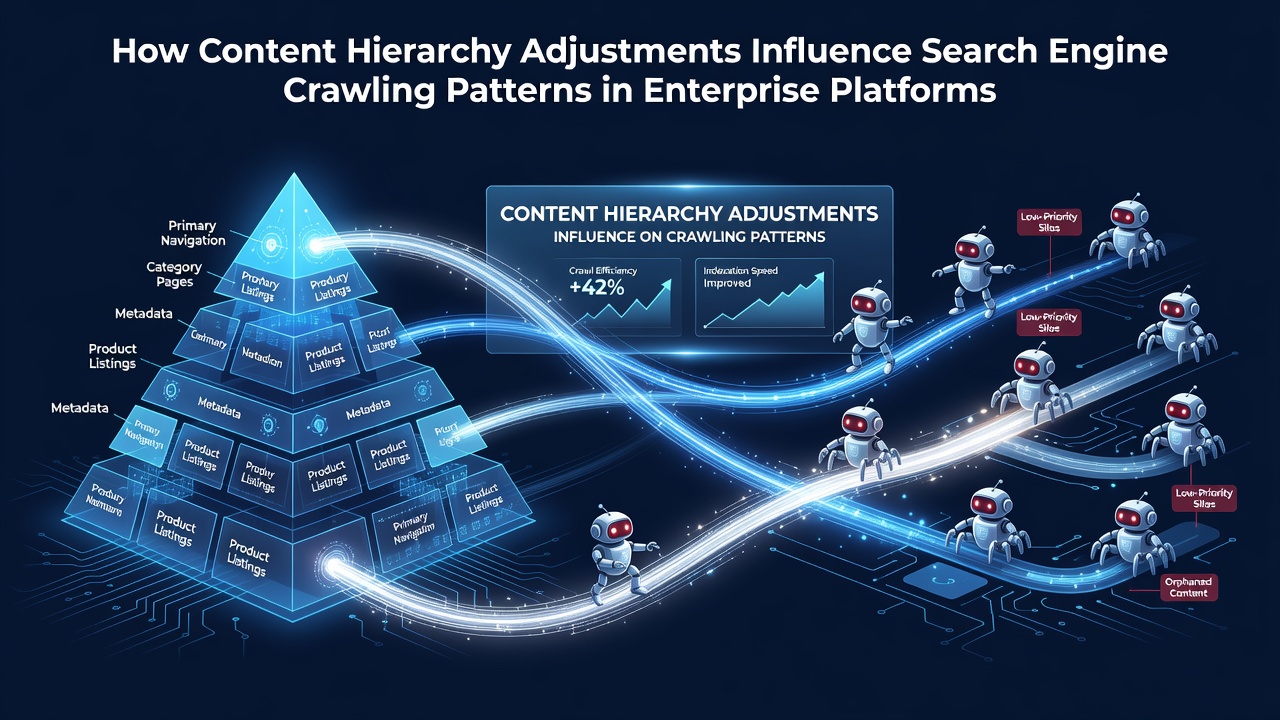
Enterprise platforms manage thousands of pages across multiple departments and product lines, and content hierarchy adjustments reshape the paths search engine bots follow during each visit. Researchers at institutions across North America and Europe have documented how changes to heading structures, URL depth, and internal linking alter crawl frequency and resource allocation on large sites. Data compiled through September 2026 shows that platforms using flatter hierarchies often record higher page discovery rates within the same crawl budget, while deeper nested structures can delay indexing of lower-level content by several weeks.
Defining Content Hierarchy in Large-Scale Systems
Content hierarchy refers to the organized arrangement of pages through menus, breadcrumbs, XML sitemaps, and heading tags that signal importance to both users and automated systems. Observers note that enterprise teams adjust these elements during migrations, redesigns, or feature rollouts, and such shifts directly affect how crawlers prioritize pages. Studies from academic groups in Australia and Canada indicate that consistent application of H1 through H3 tags across similar page types correlates with more predictable crawl patterns, whereas inconsistent use leads to scattered resource distribution.
Crawling Mechanics and Resource Allocation
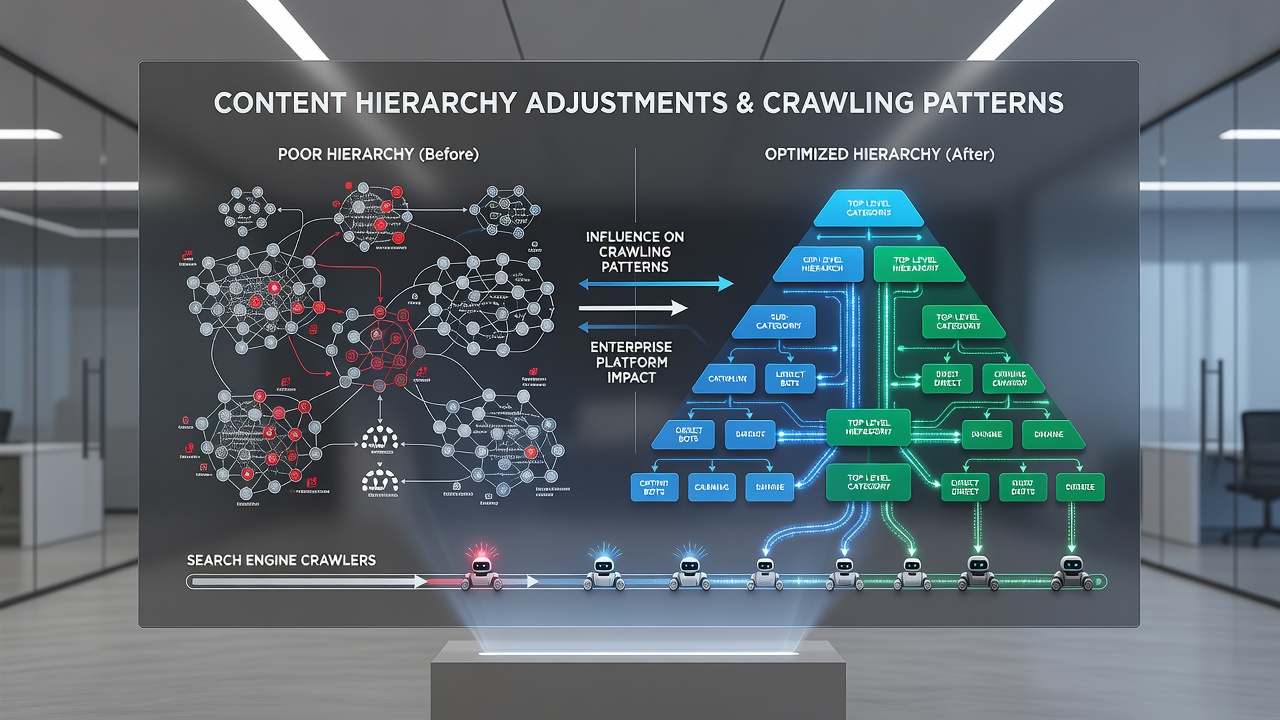
Search engine crawlers operate under finite budgets determined by server response times, internal link equity, and historical crawl data. When hierarchy adjustments occur, bots re-evaluate which URLs deserve deeper exploration on subsequent visits. Figures from industry reports reveal that sites implementing clear parent-child relationships through URL slugs and navigation menus experience more efficient traversal, allowing crawlers to reach new or updated content faster. In contrast, platforms with duplicated category structures sometimes see repeated visits to the same high-level pages while lower-level items remain untouched for extended periods.
Impact of Structural Changes on Enterprise Crawl Behavior
Adjustments such as consolidating duplicate category pages or introducing new landing sections require careful monitoring because they redistribute crawl signals across the domain. Those who have studied large deployments report that adding strategic internal links from high-authority sections to emerging content can accelerate discovery without increasing overall crawl requests. Evidence gathered through September 2026 highlights cases where enterprise platforms reduced average crawl depth by two levels and observed a measurable increase in indexed pages within the same monthly cycle. But here's the thing: these outcomes depend heavily on server capacity and existing link architecture, so results vary across different hosting environments.
Case Examples from Platform Migrations
One documented migration involved an enterprise retail platform that reorganized product categories from five nested levels to three. Crawl logs analyzed afterward showed bots reaching 18 percent more product detail pages within the first thirty days post-launch. Another instance tracked by research teams in the European Union demonstrated that updating breadcrumb navigation to match revised hierarchies improved the ratio of successfully crawled URLs to requested URLs. These examples illustrate how targeted hierarchy work influences bot behavior without requiring additional server resources.
Monitoring and Measurement Approaches
Enterprise teams rely on log-file analysis and search console data to track shifts in crawl patterns after hierarchy modifications. Metrics such as average crawl depth, pages crawled per visit, and time between updates provide objective indicators of impact. Reports from regulatory bodies focused on digital infrastructure in Asia-Pacific regions emphasize the value of maintaining consistent sitemap structures alongside hierarchy changes, since mismatched signals can prompt crawlers to deprioritize sections of a site. Platforms that align these elements typically maintain steadier crawl distributions over time.
Conclusion
Content hierarchy adjustments continue to shape search engine crawling patterns in enterprise platforms through their effects on link equity distribution, URL accessibility, and signal clarity. Data collected up to September 2026 confirms that deliberate structural refinements can improve page discovery rates when coordinated with existing crawl budgets and server performance. Organizations that track these interactions through detailed logging and periodic audits maintain more consistent indexing outcomes across large site architectures.