Tina Lang · 25 October 2026
Exploring Integration Pathways for Third-Party Applications in Comprehensive Business Platforms
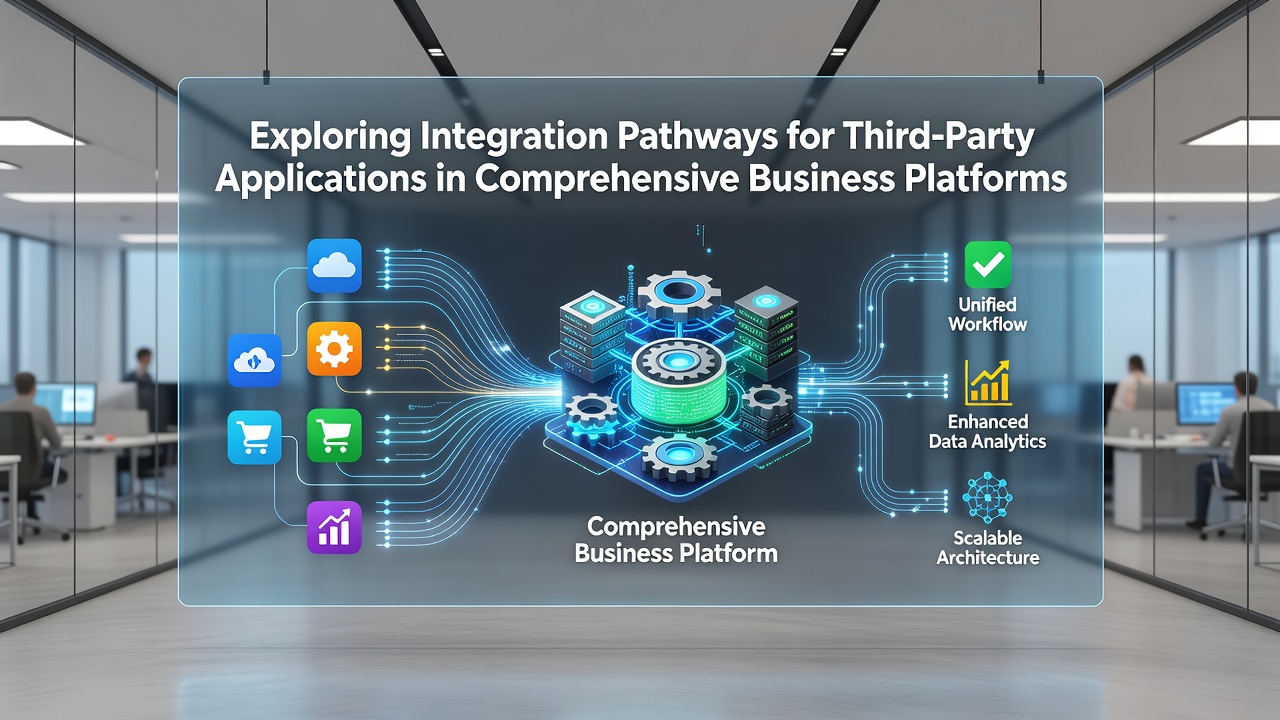
Comprehensive business platforms serve as central hubs for operations across finance, human resources, supply chain management, and customer relations, and organizations continue to expand their capabilities through third-party applications that extend core functionality without requiring full system replacements. Integration pathways enable these connections through structured methods that maintain data integrity while supporting real-time information exchange between disparate systems.
Core Integration Mechanisms in Enterprise Environments
Application programming interfaces form the foundation for most modern integrations, allowing developers to define specific endpoints that third-party tools can access using standardized protocols such as REST or GraphQL, and these interfaces support both synchronous and asynchronous data transfers depending on the operational requirements of each connected application. Middleware solutions act as intermediaries that translate data formats between platforms, handle authentication across multiple services, and manage queuing during periods of high transaction volume, which proves particularly useful when connecting legacy systems to newer cloud-based applications.
Event-driven architectures have gained traction because they allow platforms to react automatically to changes detected in third-party applications, sending notifications through webhooks or message brokers rather than relying on scheduled polling that consumes additional resources. Observers note that organizations adopting these architectures report reduced latency in workflows involving inventory updates or customer record synchronization, especially when handling data streams from multiple external vendors simultaneously.
Security Protocols and Compliance Frameworks
Data exchange between comprehensive platforms and third-party applications requires robust authentication methods including OAuth 2.0 token management and mutual TLS encryption to protect sensitive information during transit, while role-based access controls limit the scope of permissions granted to external services. Research from the National Institute of Standards and Technology outlines recommended practices for securing API gateways that sit between internal systems and outside applications, emphasizing regular vulnerability assessments and logging of all access attempts.
Regulatory requirements vary by region yet consistently demand transparency in data handling, with frameworks such as those from the European Commission requiring explicit consent mechanisms and audit trails for any personal information processed through integrated tools. In October 2026 updates to cross-border data transfer agreements took effect, prompting many platforms to revise their integration documentation and implement additional encryption layers for applications operating across multiple jurisdictions.

Implementation Strategies Across Different Scales
Smaller enterprises often begin with low-code integration platforms that provide prebuilt connectors for common applications such as accounting software or marketing automation tools, reducing the need for extensive custom development while still allowing configuration of business rules specific to their processes. Larger organizations tend to invest in custom integration layers built around enterprise service buses or integration platform as a service offerings, which support complex orchestration involving dozens of applications and maintain centralized monitoring dashboards for performance tracking.
Those who've studied platform migrations observe that phased rollouts, starting with non-critical functions like reporting dashboards before moving to core transaction systems, minimize disruption during the transition period. Data from industry reports shows that companies completing such phased integrations achieve faster time-to-value compared with attempts to connect every application at once.
Emerging Patterns and Technical Considerations
Containerization technologies now influence how integrations are deployed, with many teams packaging their connection logic into microservices that scale independently and update without affecting the primary platform. This approach supports hybrid environments where some applications remain on-premises while others operate in public cloud infrastructure, and it facilitates testing of new third-party connections in isolated environments before full production deployment.
Analytics capabilities embedded within integration layers provide visibility into data flows, highlighting bottlenecks or error patterns that might otherwise remain hidden until they affect end users. Platforms incorporating these monitoring features enable administrators to set automated alerts when transaction success rates drop below established thresholds, allowing proactive resolution before widespread issues develop.
Conclusion
Integration pathways continue to evolve alongside advances in platform architecture and regulatory landscapes, offering organizations multiple routes to extend their comprehensive business systems through carefully managed connections to third-party applications. The combination of API standards, middleware orchestration, and security frameworks provides the technical foundation, while phased implementation approaches help control complexity during adoption. As platforms incorporate more event-driven capabilities and container-based deployment models, the range of viable integration options expands further, supporting diverse operational needs across industries and regions.